Table of contents
Because it is real.
Because it is lucrative.
Because it’s just plain good.
I use AI. It has simplified many processes in web design, and can be especially useful if, as in my case, you really don’t know what you are doing.
Creating content for digital applications used to be one of the most time-consuming part of web design. AI has also changed this. Now you just need to write the right prompt: “Write me a product description for this hula hoop that we have added to our catalog.” Two seconds later you have your description. Well, no. Actually, you have:
a long description,
a short one,
a friendly version,
a professional version
and a hillbilly go home version.
Then the prompt, “Ok, make me an image of a little girl using the hula hoop with a dog next to her.” “The dog should have his tongue hanging out” This time it takes a little longer (I use a free version, I am sure that a professional version is much quicker), and then out pops the little girl with the dog. Oh no!
A St. Bernard! Prompt: “Make the dog a poodle” And now we are set to go.
Easy.
Real easy.
Sometimes too easy.

Why too easy? Let me explain.
So now I open my browser, but not to work. I want to take my wife out for dinner. Its our anniversary. I want to go somewhere new. So, I search the web.
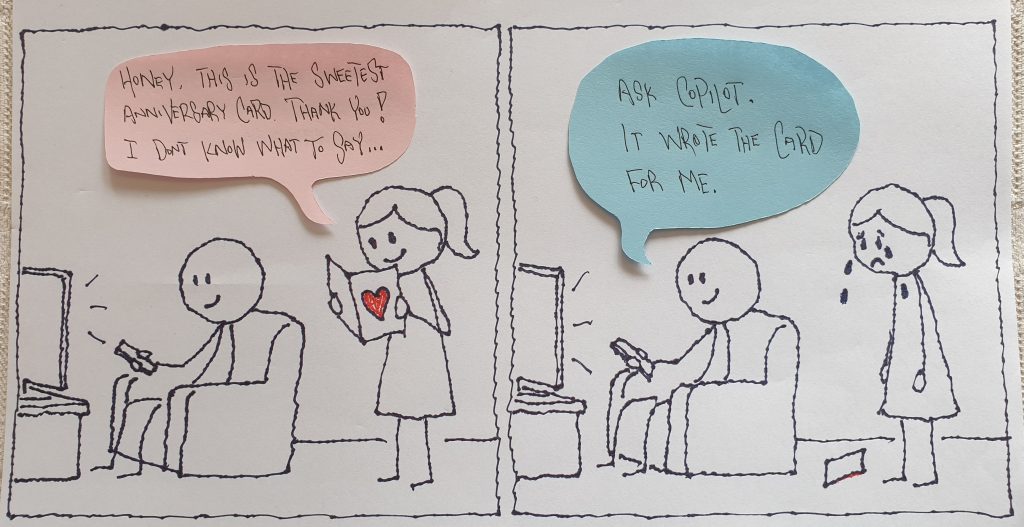
I find a restaurant and go to their site.
Simple row and column design.
Ambiance and cuisine descriptions that make me feel like
I will find hula hoops on the menu.
Pictures of food that somehow remind me of a St. Bernard.
It is inexpensive. But no, we are not going there. Who knows what we will find.
I look further. Next restaurant next site. Someone put some effort into this one. The pictures are clearly taken with a cellphone, but the place looks nice. Yes, that is most certainly their food. Looks good. Nice menu. Handwritten. I would definitely go there, but it is our anniversary. Maybe somewhere a little fancier.
Next restaurant. Wow. What is this for a home page! A picture of a three-course meal, exquisite decoration, the owner looks French. Little pricey, but that’s where we are going!
So now you may be saying, “Yeah but who’s to say that that third page was not all just AI?” Well you right. Except if Steal My Stuff is behind it. Then it is not. But that is not my point. My point is this: The second restaurant with the cellphone pics – we are now their regular customers.
There are still many business people out there who want to do just that: business with people.
We are pretty analog.
Generally speaking, we research digitally. We use digital tools for correcting spelling and assisting with translation. We use printers and digital cameras. At the basis, that’s it. We will sometimes use filters commonly found in digital cameras.
We will under no circumstances use AI to modify a product.
No generating, adding or erasing.
No hula hoops. No St. Bernards.
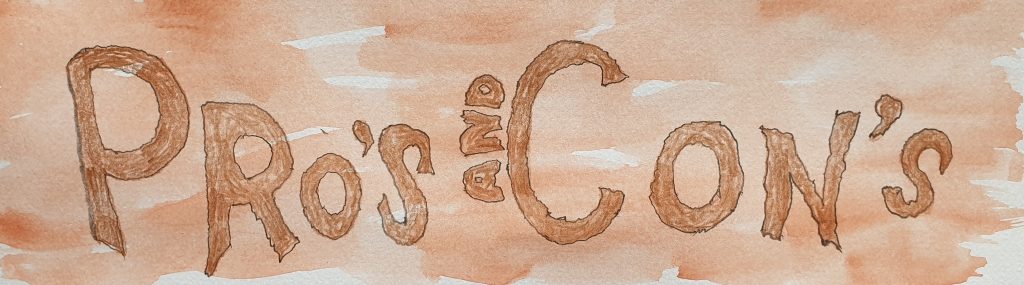
This is an ever-expanding list of, well, lets call them the idiosyncrasies of analog content, especially fonts – analog text. We are calling them pro´s and con´s, but to be honest, they are just characteristics that could either be advantageous or disadvantageous, depending on what you are trying to achieve with the content. For example:
- No copy and paste into a text file.
- If a crafter makes a mistake then no backspace and retype.
- If you are not satisfied with a product, the crafter has to basically start from scratch.
- Bots generally can’t read analog.
- Google won’t translate analog (as far as I know).
- Analog content caffeinates your digital project, taking the yawn out of the wake-up call. (Ok that’s not a characteristic, rather our modest iyf-ai opinion.)
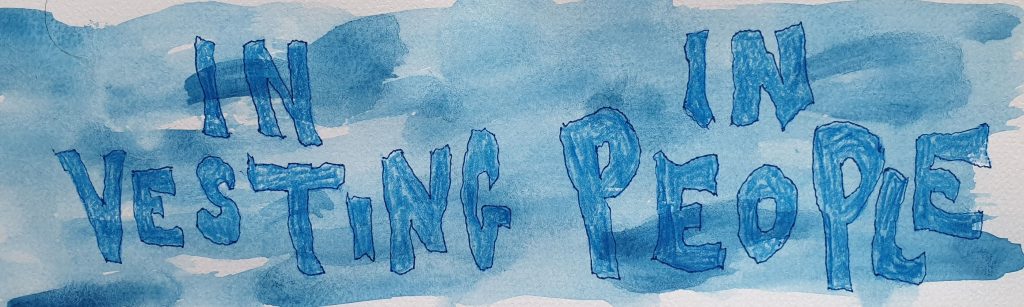
Going analog with Steal My Stuff is not just about putting AI back in its place. It is about putting people back in theirs. It is about helping creative people with disabilities find their place in an increasingly inhuman world. Investing in people is always a good investment. Check the following links to learn more:

What we mean when we use the term “AI”
So, Hollywood and associates have romanticized the whole idea of AI to a point that I want to clarify what we mean when we use the term. We are speaking of such tools as “Chat GPT” or “Copilot”. Instead of endorsing one of these products we choose to use the broader term AI.
Is AI intelligent?
I entered that question into my AI tool. Wanted to see how it would respond. Here an excerpt:
“That depends on what you mean by “intelligent.”… A useful analogy is that AI is somewhat like an exceptionally capable tool. It can often produce results that look intelligent because it has learned statistical patterns from vast amounts of data and can reason over them. But it doesn’t “know” things the way a person does or experience understanding.”
That is what is often missing in many web projects: the understanding experience. This is where analog content and Steal My Stuff comes in – like a red cape fluttering after falling Lois.